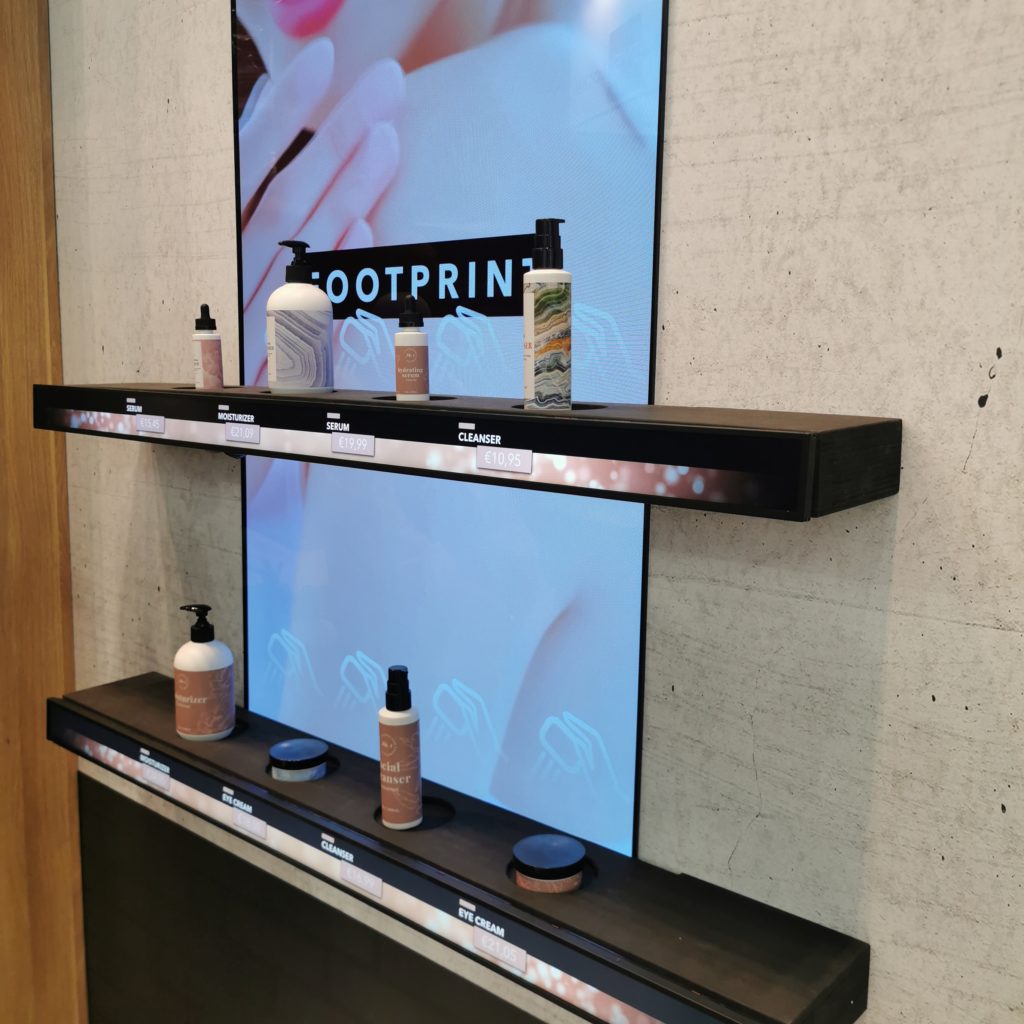

In the face of fluctuating prices, price monitoring helps you to keep the rhythm.

In the face of fluctuating prices, price monitoring helps you to keep the rhythm.

The latest international events – pandemic, war, inflation and economic slowdown – make all economic slowdown – make all price forecasts obsolete. It is very difficult to predict the price of products in the medium term. Curves are breaking, tables are charts are breaking down, past models are no longer usable. Faced with this (r)evolution of paradigms and this price waltz, the daily competitive intelligence allows you to find your bearings and stay on track. In this article, we will see how the current situation is exceptional and how the best tool on the market can help you.

For brands, a pricing headache.

It is becoming hazardous to predict the prices of materials in the DIY sector, decorative items, food It is becoming hazardous to predict the prices of materials in the DIY, decorative and food sectors, as the impact is so multi-layered. The rise in gas prices, for example, has a direct influence on the price of tomatoes grown in greenhouses tomatoes. The price of wheat and maize is also rising, dragging down the entire food sector. food sector. The price of oil is also rising, and this is in addition to a revolution in logistics revolution following the Covid waves, implying a rise in transport costs at all levels… And these are just a few examples. All these data all of this data is turning business models upside down. Cash flow is the first to be affected. The pricing strategy and the marketing mix are under pressure.

For retailers, limited room for the process

At the end of the chain, retailers are faced with customers who are increasingly price conscious. The increase in prices has only increased a phenomenon that has been widely observed in recent years. Thanks to their smartphones, consumers are informed about the price of each item in real time. The current financial stress has further hardened this trend, leading to increasingly aggressive commercial practices practices in its wake.

An uncertain future.

Who can predict the next change of pace? Not even the OECD, which stated in its March
2022 report: "the economic impact of the conflict is highly uncertain and will depend on the
duration of the war and the responses of states". It is therefore now real time observation of
the markets that should be prioritised in defining its tariff policy. pricing policy. Competitive
intelligence provides benchmarks, but it is still necessary to have access to reliable, complete
and synthetic information. reliable, complete and synthetic information.

The importance of keeping up with the market.

While it is important to keep the balance between price point and profitability, it is no less important to be fully aware of the pricing trends in the sector in order to stay to stay in the race. Competitive intelligence is at the heart of the strategies. However, in the face of constantly changing raw material prices, prices are running amok.

We have observed a significant increase in daily price changes. All sectors are impacted by this impacted by this market turmoil. Pricing strategies are now being challenged every day.

Retail Shake, real-time price monitoring.

Retail Shake offers a solution that scrapes competitive data on a daily basis, including price data from hundreds of retailers and thousands of brands. Without any special equipment, on your current desktop computer, you can benefit from the Retail Shake solution tomorrow.
The data is cleaned by our experts on a daily basis to ensure optimal reliability. Our team is at your disposal for a personalised follow-up, the activation of targeted functionalities and the resolution of problems as soon as possible. as soon as possible.

How to refine your pricing strategy, concretely.

In the Retail Shake tool (online or via the app), you are taken to a tab called your brand.
This page immediately displays the top price, which allows you to check your performance.
You can export them to Excel or CSV if required. With one click, you can also see the price differences between brands and even a list of brands where your products are sold. even a list of the stores where your products are the most distributed by price. All this pricing information is also available for your competitors ; products.
Retail Shake displays the competitors who sell the same product as you and the corresponding and the corresponding prices. Price differences between you and your competitors are shown. You can see your price positioning very quickly. For nearby shops where the product is available, you have the mention shop.
You can thus detect where your performance and that of the brands in the sector are in real time to refine your pricing strategy.
Control its stocks and the availability of its products?

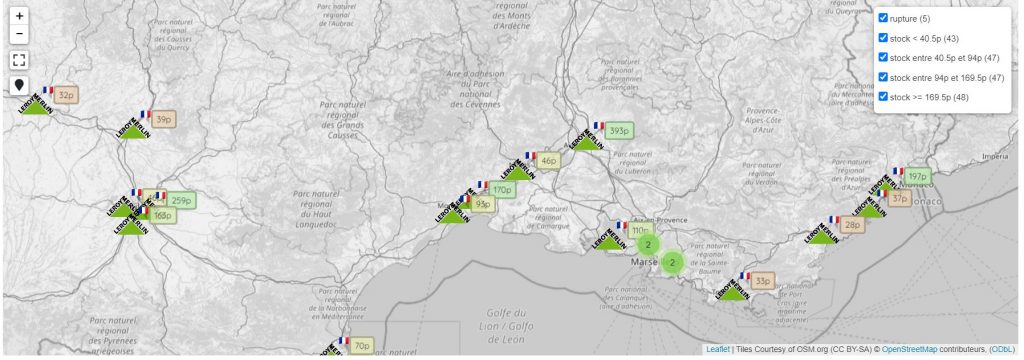
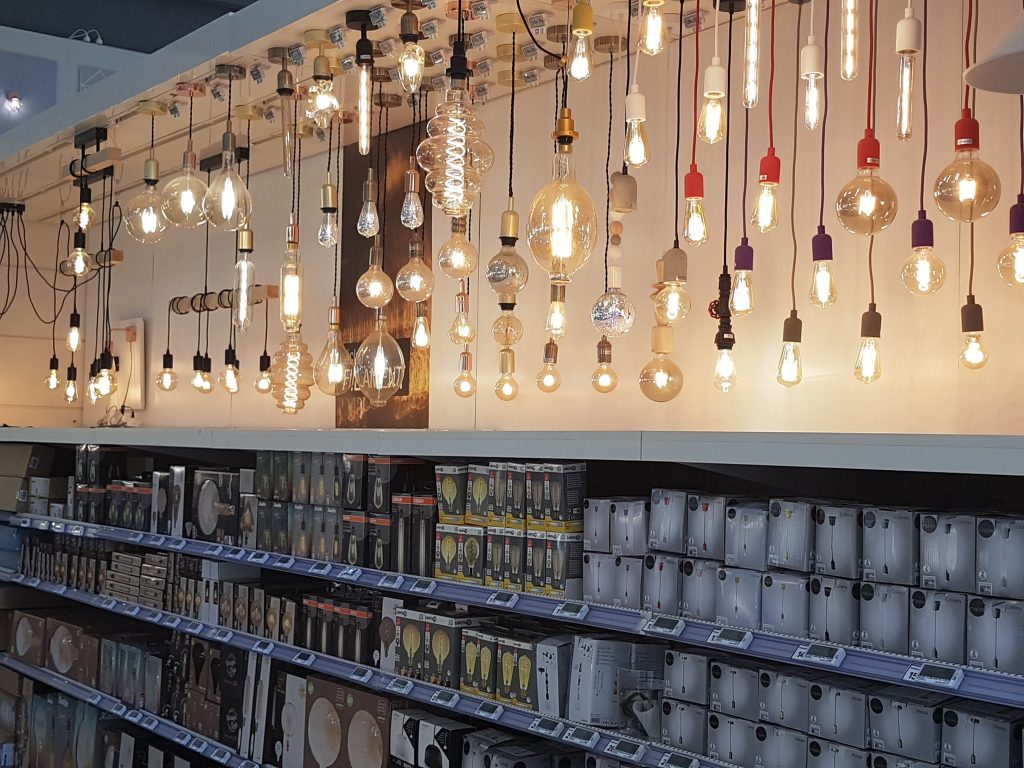
Linear lighting products. We see a tidy stock, no break, a self-service stock and a very readable face.

Inventory management: definition and issues 

The acquisition and storage of inventory represents a significant cost to businesses. This is why it is essential to ensure the sustainability of the company, to have good inventory management. To do this, the company must determine:

  • when to stock up
  • quantities to buy

This management is essential to meet all customer requests.

Avoid under-storage

If the stock is not large enough, we are talking about stock outages or undersupery. If the company has a product not available at a sale, a stock outage has a negative impact on the service rate. This can result in a loss of the company’s customers and buyers, who turn to competition.

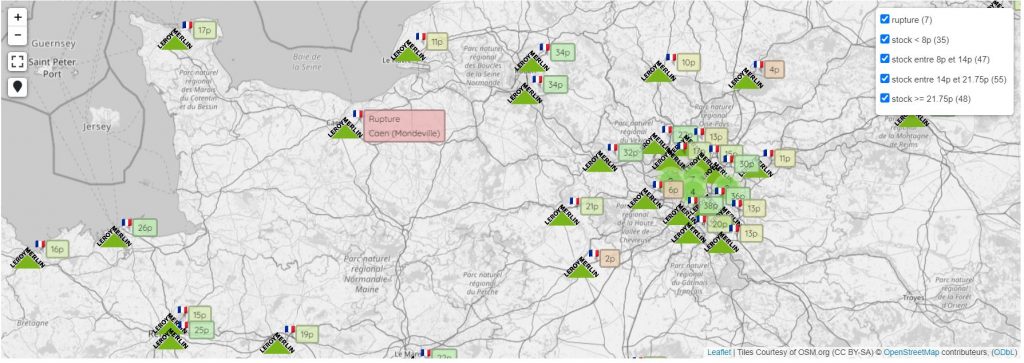
This product is out of stock in Caen whereas usually there are at least ten pieces per store.

Avoid overstocking

Maintaining too high a level of products entails very high costs (Logistics, fixed assets …) that weigh heavily in operating accounts. In addition, poorly controlled volumes create a risk of becoming obsolete or aging poorly.

The map shows a store that has ten times more inventory than the neighbouring stores. A surstock that will take up space at the expense of other products in the store. It is also the risk of causing disruptions in the chain’s other stores.

How do you manage your inventory?

Safety and alert threshold.

Safety threshold (SS): it aims to avoid stock outage. It is a minimum amount to hold to meet demand. When the safety threshold is reached, the command point is triggered if no Alert Threshold (SA) is set. To be effective, the security threshold must take into account resupply times. The longer the delay, the higher the security stock and vice versa.

Warning threshold (SA): it is the stock that triggers the order, it is equal to minimum stock – security stock.  Minimum stock (SM): it is the stock that corresponds to sales during delivery times. For example, a supplier asks for a week of delivery. If the sales of an item are 20 pieces per week, that is the minimum stock. If the store orders with only 15 pieces left, it will be out of stock before the end of the week.

The distribution of your stocks …

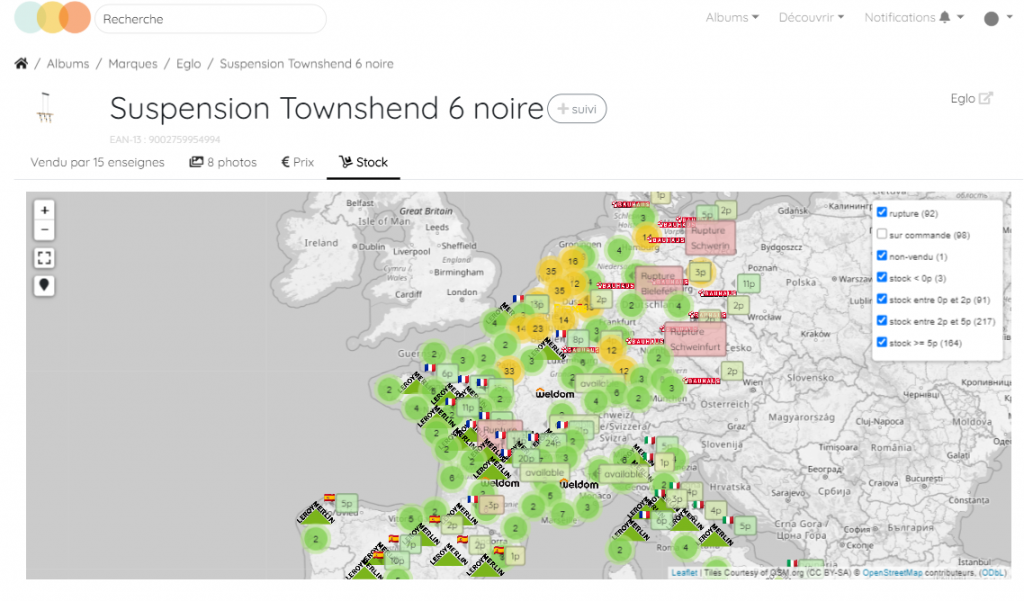
To better track your stored products, Retail Shake geolocates your inventory. You can see on the map, those that are present in each store. To get better visibility, you can filter according to your needs (product breaking or less than such number of parts).

Screenshot of our Eglo Townshend suspension tool. You can see the amount of inventory of this product in each store.

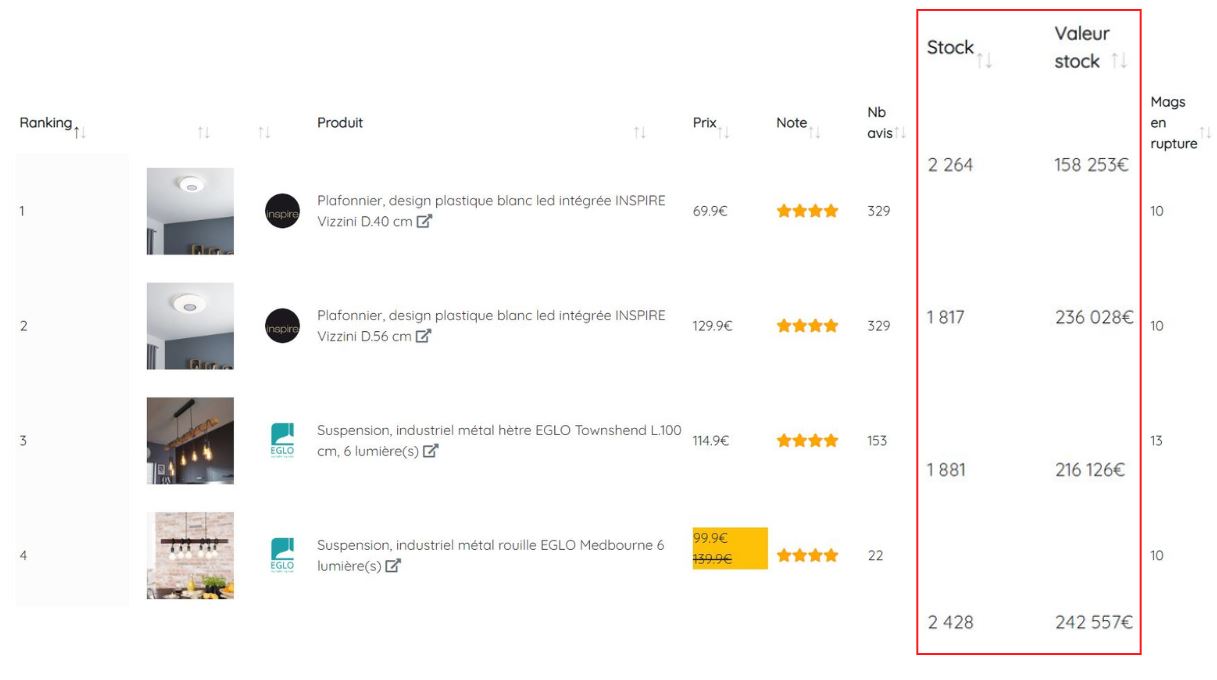
You are alerted in real time to the quantity and value of your inventory as well as the stores that are out of order. This information is indicated for each product.

Screenshot of our tools to know the stocks and stock values of each of your products.

Retail Shake helps you locate your inventory, detect any breaks or those that are left. You are then master in your decisions: delivery arbitrages, stock balances in a geographical area, destocking or reverse logistics.

To find out where your products are distributed, we invite you to read this article: But where are your products?!? 

Do you want to optimize your ranges, make the right decisions quickly and have a real-time photo of your competitive space?

The essentials to know about your rate watch.

Before starting a definition of tariff watch.

Tariff watching is a technique that allows a company, distributor or brand to regularly or continuously monitor the prices charged by its competitors in the market.

The importance of tariff watch for a company.

Today, it is important for distributors and brands to remain competitive. To do this, you need to know how to adjust your pricing policy on the products they market. And whatever the distribution channel, whether in-store or via the Internet. In other words, in order to make the right decisions, brands must constantly monitor tariffs, to monitor the evolution of the prices charged by distributors of their products. Distributors, on the other hand, must monitor the prices charged by their competing brands.

Tariff watching is therefore essential to develop its business strategy more effectively.

The 6 stages of the tariff watch:

  1. Defining the competitive perimeter
  2. Data collection
  3. Product matching
  4. Analysis
  5. Decision-making
  6. Moving into action

Step 1 out of 6: Definition of tariff scope

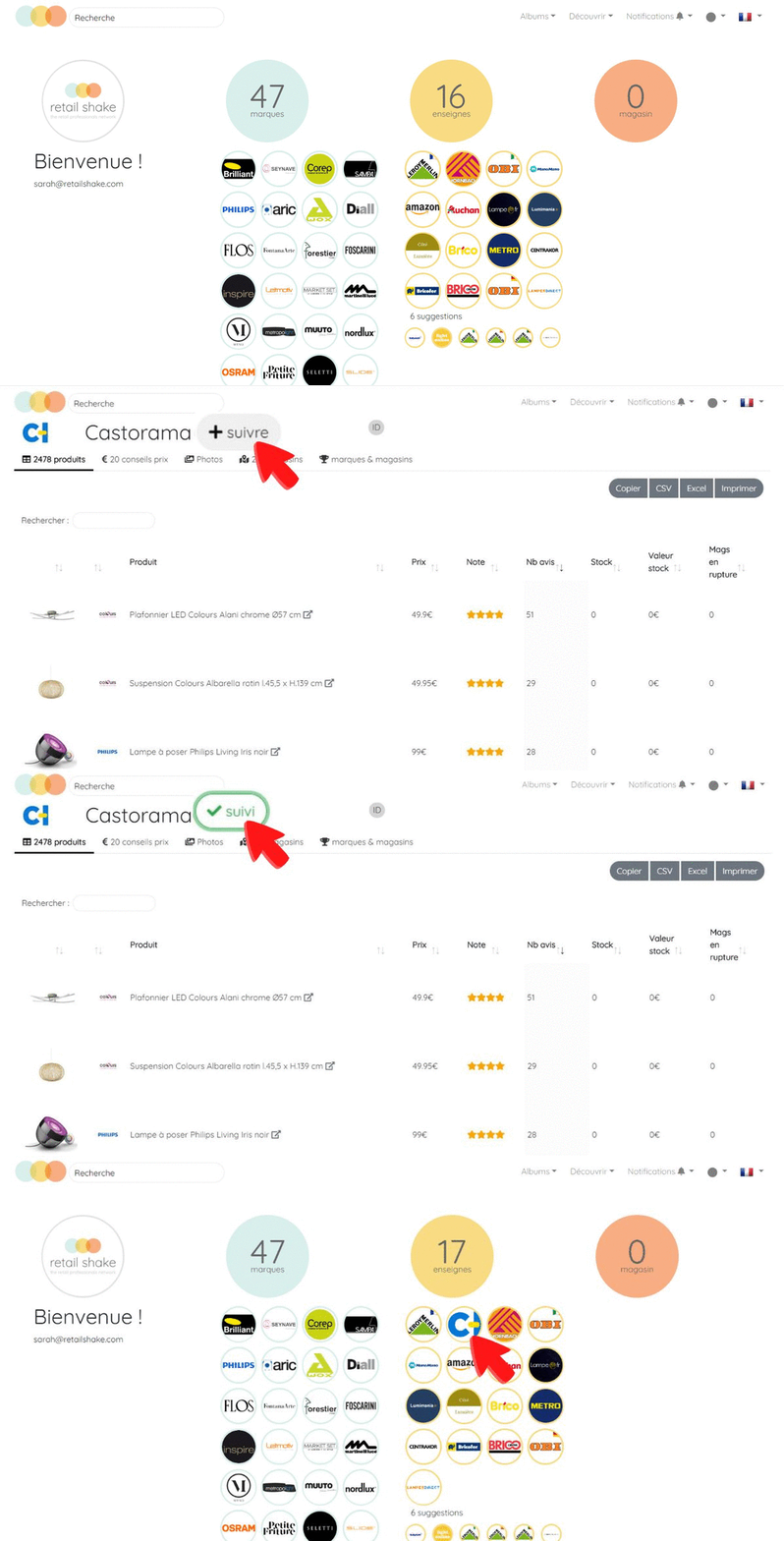
The first step in the tariff watch is to define its tariff scope. Retail Shake lets you track the brands you’re interested in. All you have to do is click the “SUIVRE” button.

Follow a sign (here the Castorama sign) with the Retail Shake tool

Step 2 out of 6: Data collection

Retail Shake offers smart pricing watch. Our robots scan the product pages of its customers and competitors on the internet in real time. Our solution scans 2,699 brands and retailers.

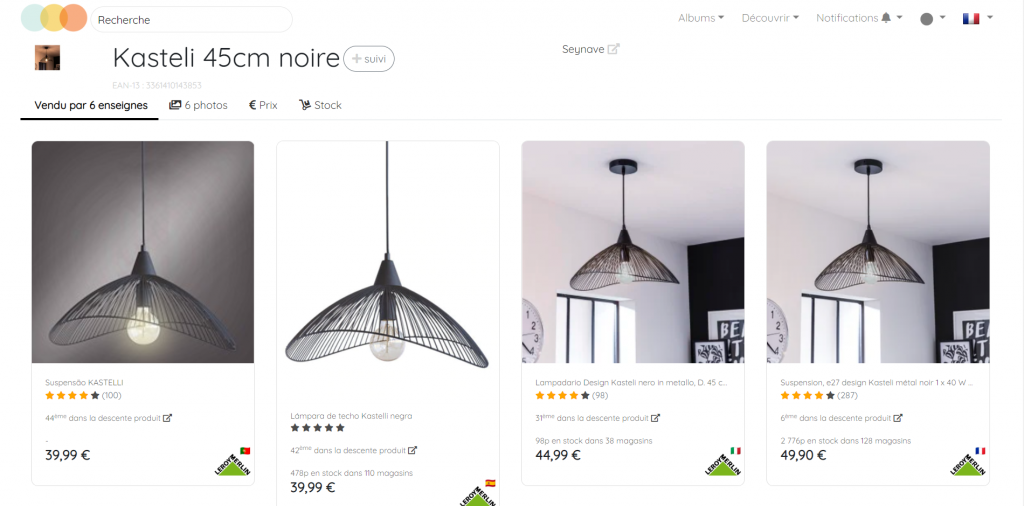
For example, the photo below shows the product sheets of a Seynave suspension in 6 brands: Leroy Merlin Italy, Leroy Merlin France, Weldom and Brico. 

The product sheets of a Seynave suspension in the Retail Shake tool.

Step 3 out of 6: Product matching

Our artificial intelligence recovers all the product catalogs marketed on the market. Then it automatically establishes a match between these products. To do this, it uses barcodes, supplier references and image recognition.

Step 4 out of 6: Analysis and your price indices

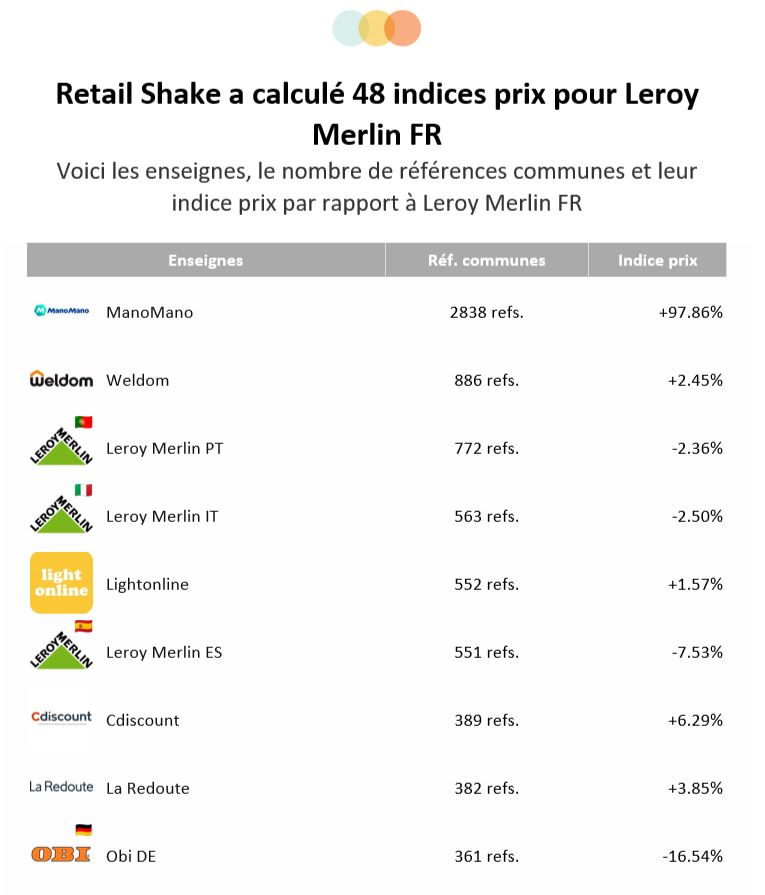
Retail Shake calculates the price index for your brand and that of your competitors. You are then informed about the competing brands, the number of common references with them and their price indices.

On the example below, Retail Shake calculated 48 price indices for Leroy Merlin. We notice therefore that the ManoMano brand with 2828 common references and a price index of 97.86 compared to Leroy Merlin.

Retail Shake calculated 48 price indices for Leroy Merlin

Step 5 out of 6: Decision-making

Once you have collected and analyzed the information on your pricing watch, you have better knowledge of your environment. However, gross rate watching is not enough to make the right decisions in the short and long term. You have to cross this with quantitative aspects (stock and digital distribution) and qualitative aspects (customer reviews, photos and texts, merchandising).

It is by combining the four main areas of marketing mix: product, price, communication and distribution, that a brand or brand is able to make the right decisions to ensure its success or that of its product.

Examples of decision-making related to the tariff watch analysis include:

  • Having to lower these prices in order to remain competitive.
  • Have the opportunity to increase rates by remaining competitive but increasing its sales margins.
  • Monitor its exclusives and distribution monopolies.

Step 6 out of 6: Moving to action

Finally, the final step: The move to action. The move to action is simply the things to do in the back office (central or store). The price change, the product repository (Product Information Management), ERP (electronic catalogue).

Do you want to optimize your ranges, make the right decisions quickly and have a real-time photo of your competitive space?

Retail: 4 trends to remember from Retail Euroshop 2020

Retail Shake went to discover the Euroshop show which was held from February 16 to 20 in Dusseldorf!

We had the chance to participate in this great three-year mass that is Euroshop in Dusseldorf. It's "THE" global retail show. And it was a learning expedition organized by Business France with our colleagues from Deewee, Alkemics, Alcmeon, Acteos and Belive.

1/ Retail: Focus on customer experience

More than ever, the store cleaners understood that the stores were no longer just points of sale but also places where you could meet, eat, find products, answers, services but also fun and astonishment.

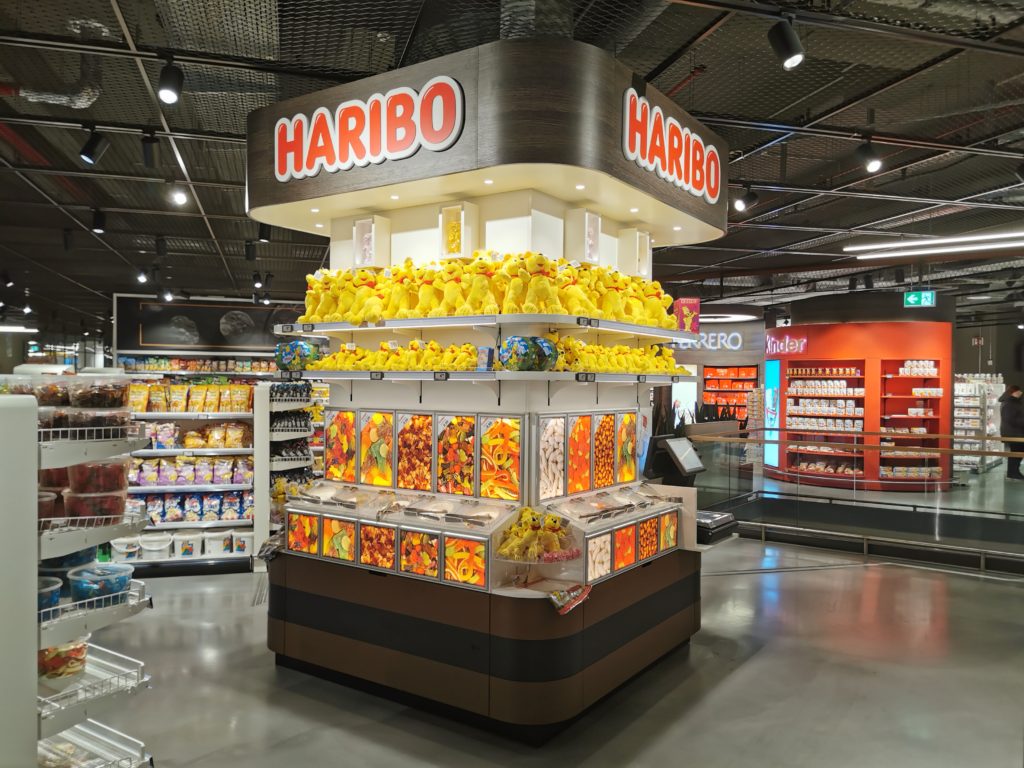
 The Edeka Zurheide brand offers corners that strongly express the identity of a brand: Haribo, Kinder, Ferrero.
The Edeka Zurheide brand offers corners that strongly express the identity of a brand: Haribo, Kinder, Ferrero.
And... oh surprise...  in its basement, the gourmet restaurant Setzkasten, number one in Dusseldorf!
And… oh surprise… in its basement, the gourmet restaurant Setzkasten, number one in Dusseldorf!

2/ Image recognition is ready for the store

… to pay…

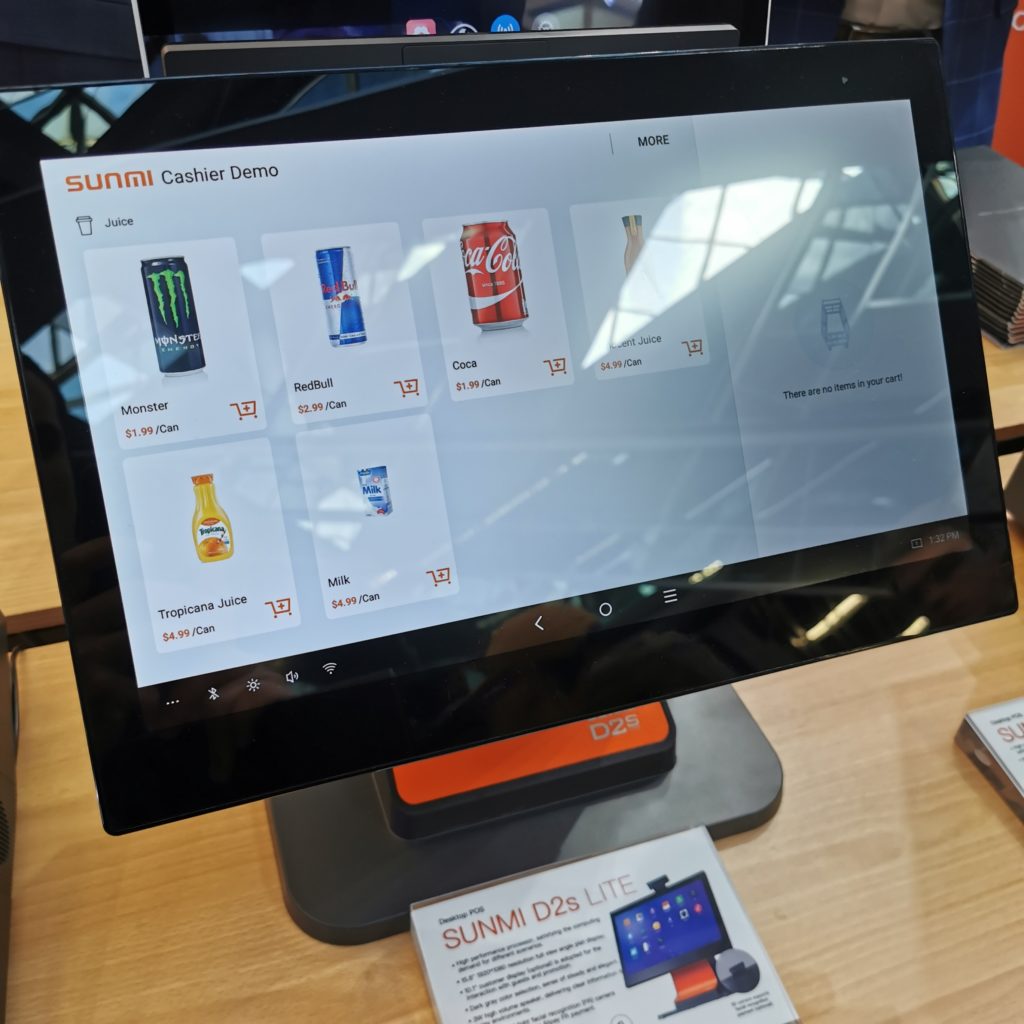
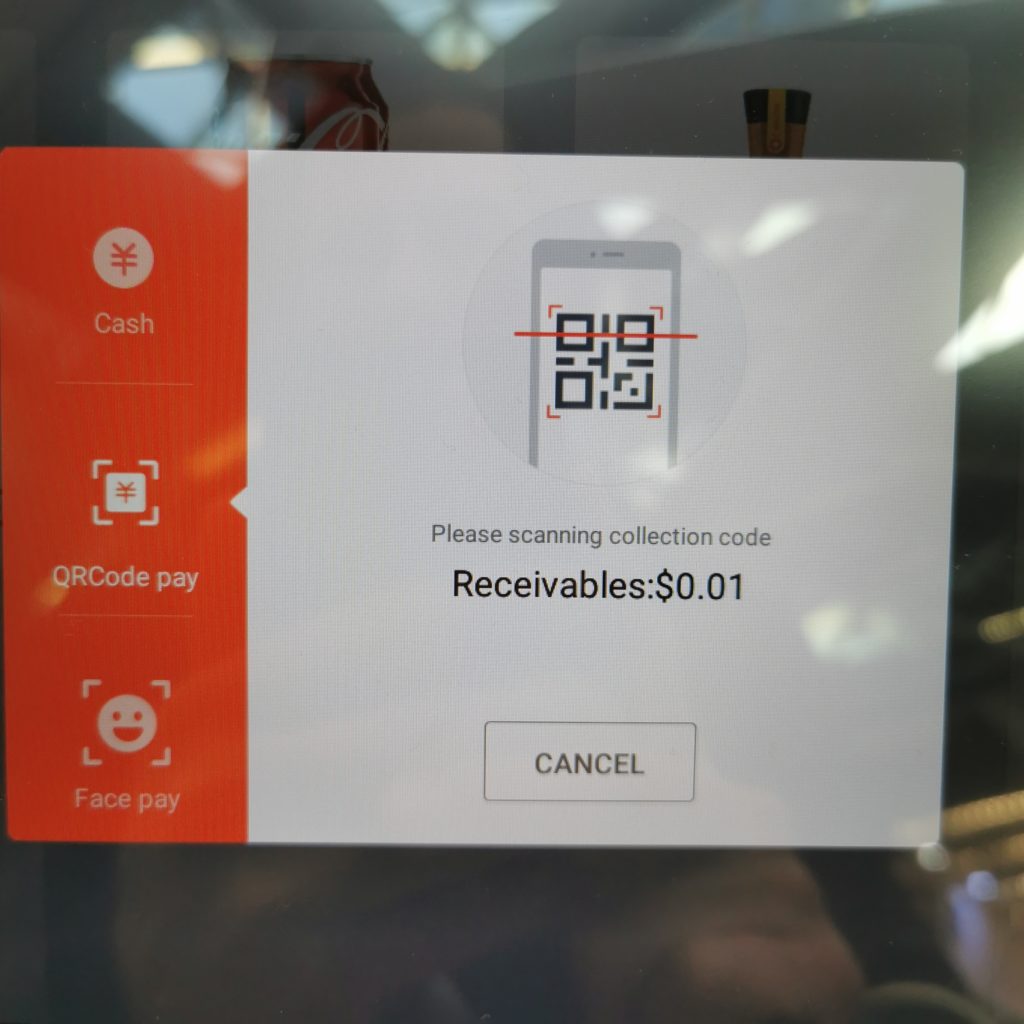
This Sunmi fund offers a face recognition payment
Pay in cash, QR code or 'Face pay'

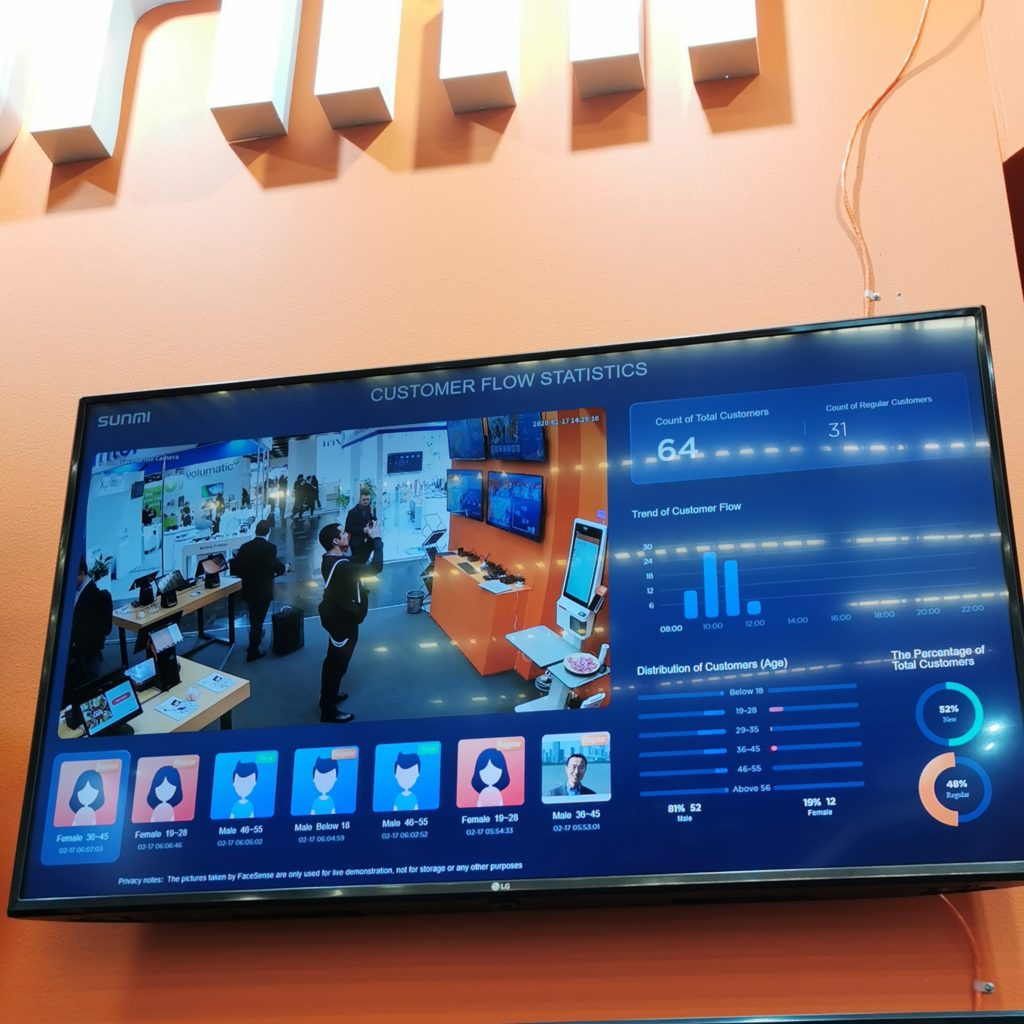
… to count customers and track in-store traffic…

Photo of a screen that tracks in-store traffic.

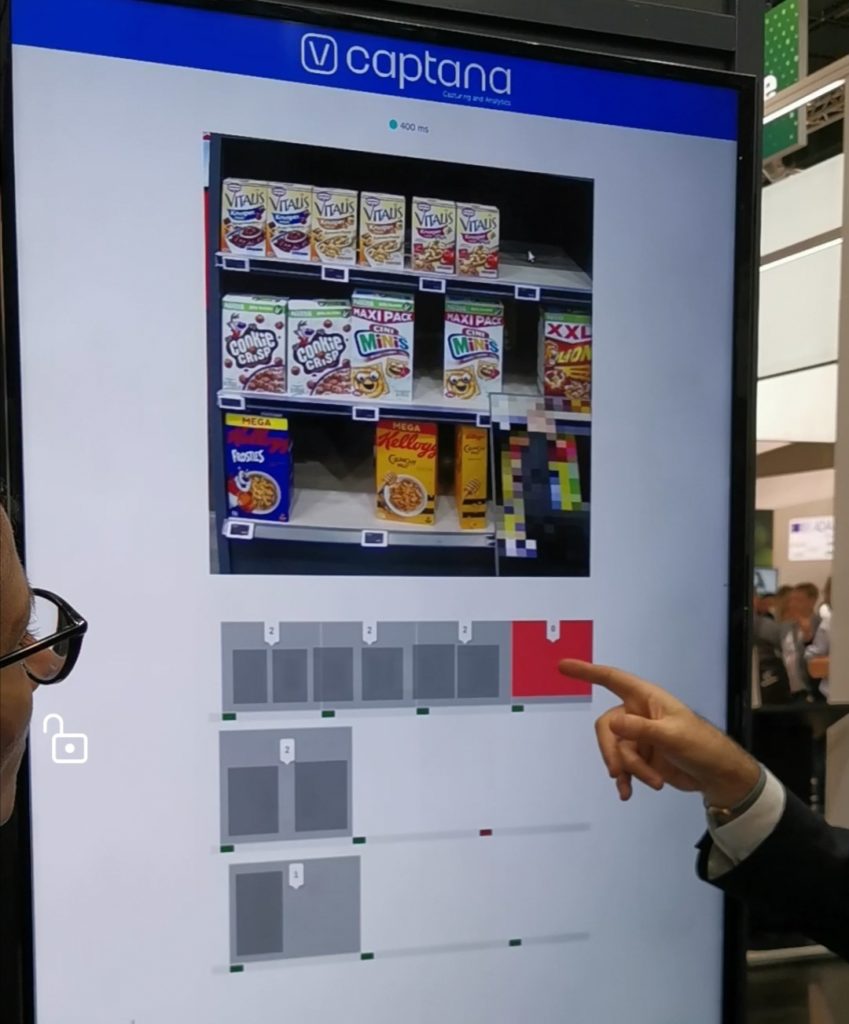
… to monitor linear lines, stocks and ruptures.

Captana by SES Imagotag

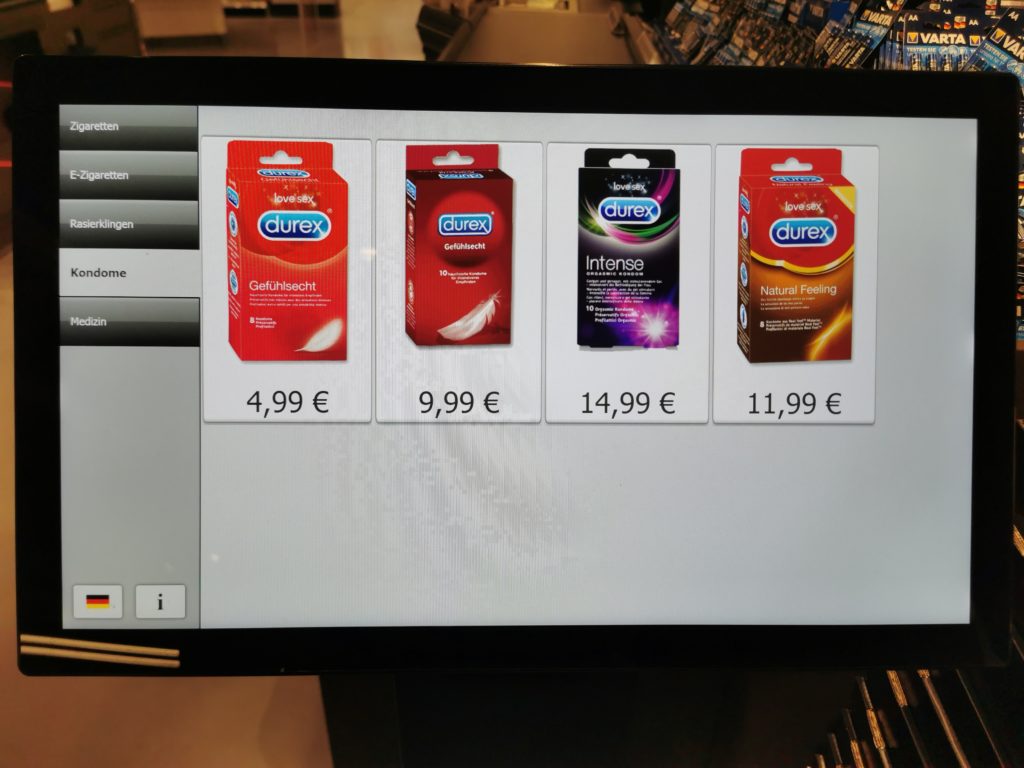
3/ Terminals are no longer gadgets

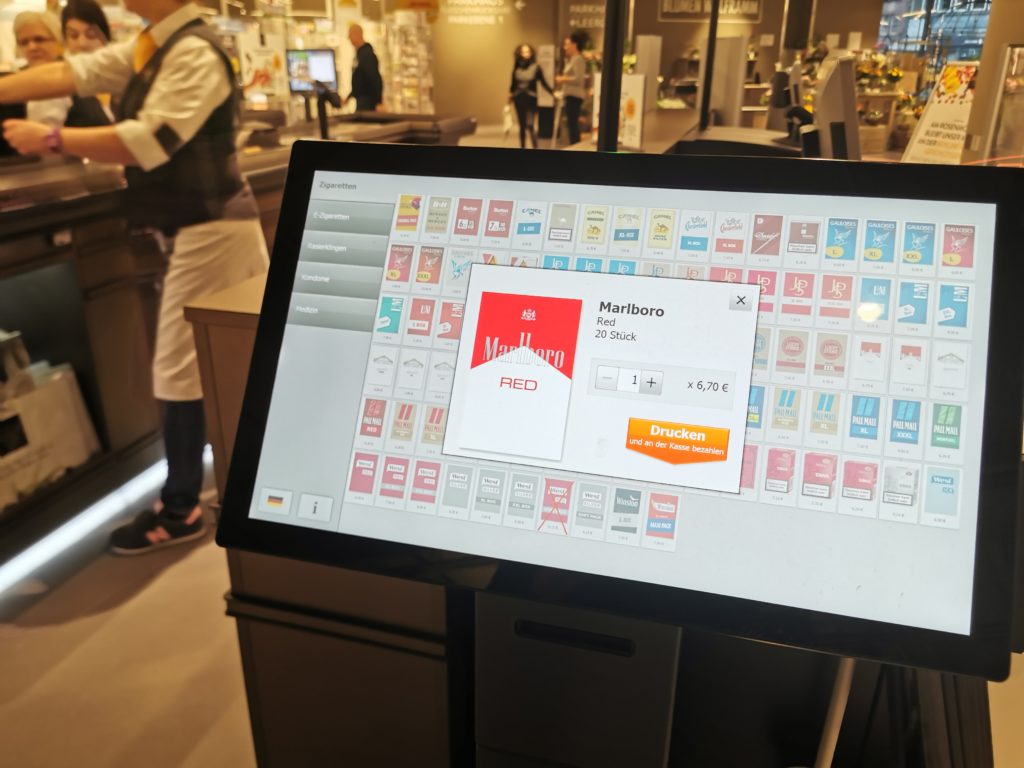
How many times have we seen 'test' kiosks in store, broken down or disconnected? The use cases are now clear on the offer extension and on sensitive products.

Here, buy in case of cigarettes
... condoms, razor blades and medicines.
… condoms, razor blades and medicines.

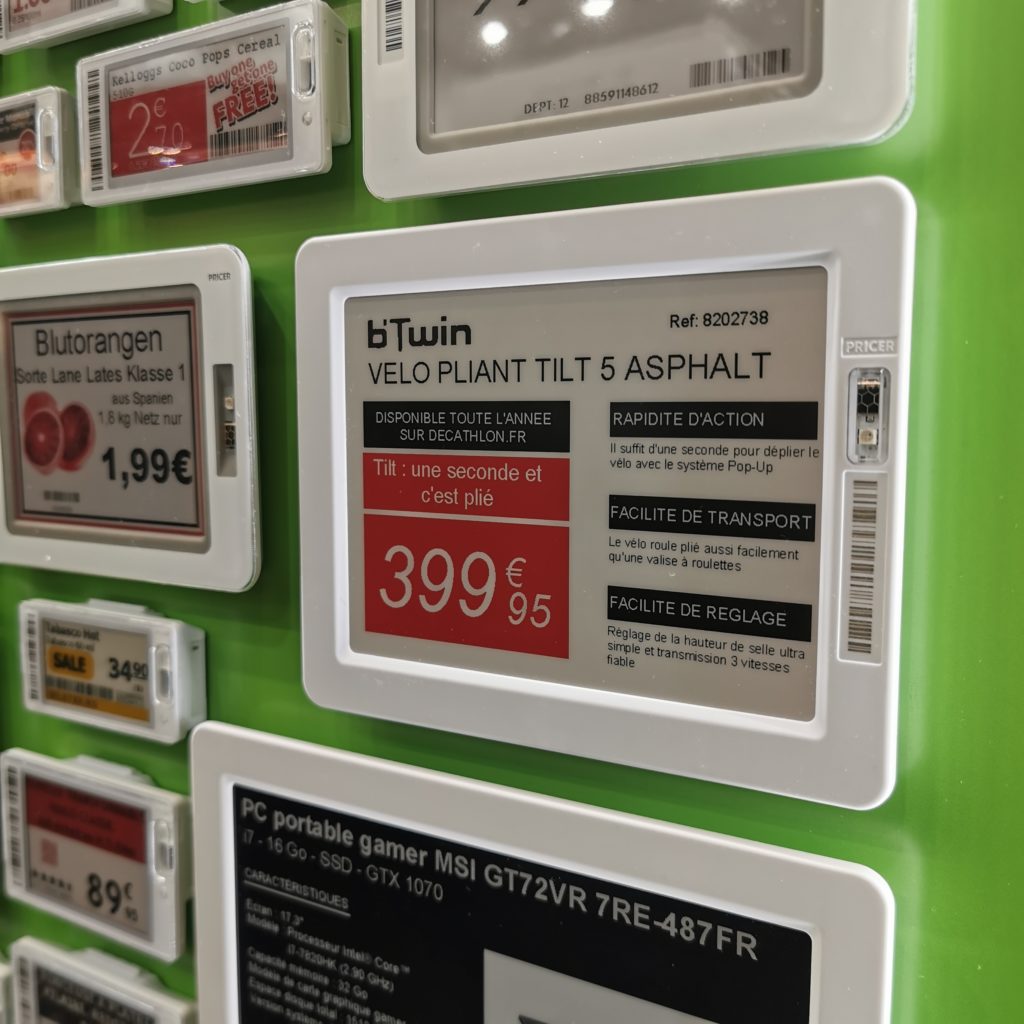
4/ Linear information becomes queen

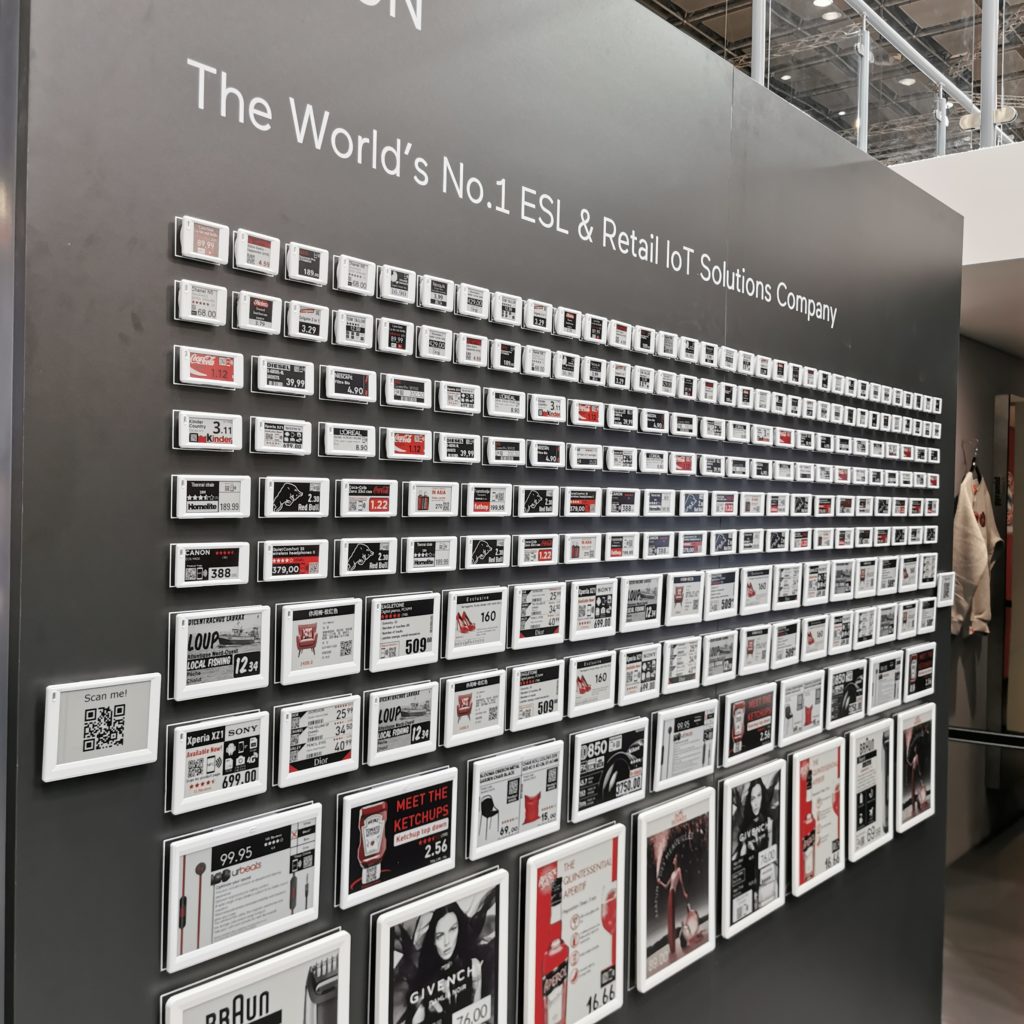
Seeing all these increasingly sophisticated electronic labels made me think of the world of video games. At the time of the first portable consoles, Nintendo had released a black and white Gameboy in order to favor autonomy and portability. Now the Switch displays millions of colors in HD. It is therefore conceivable that these three-colour labels will follow an equivalent progression.

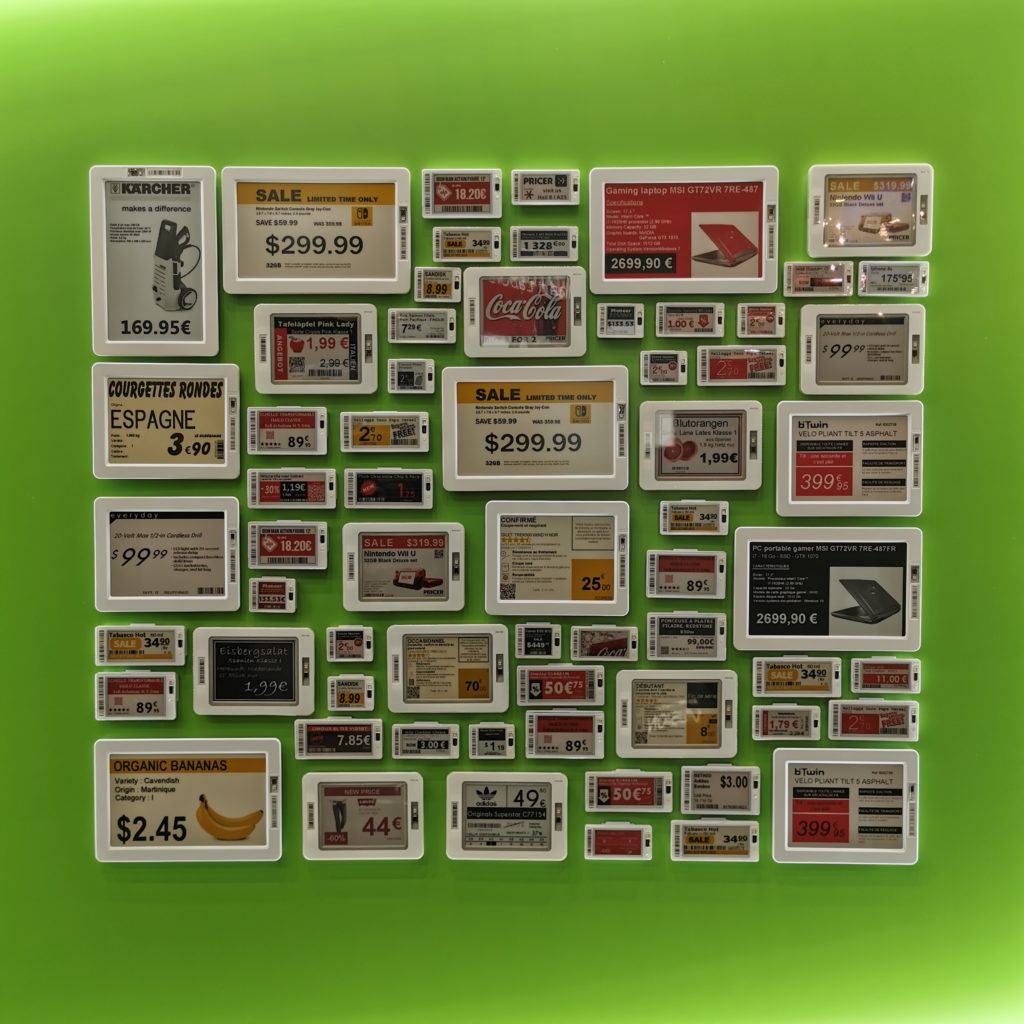
Photos of electronic labels that become real product listings.
Electronic labels become real product cards.
The range of possibilities is becoming immense, at Pricer...
The range of possibilities is becoming immense, at Pricer…
... or SES Imagotag
… or SES Imagotag
The display even fits the sign's charter. Here, a very glamorous expression.

Deep learning: recognition of a product pack

Here is a short video of the deep learning project we conducted with PicWicToys. This app is dedicated to in-store teams. It allows them to instantly visualize their competitive positioning on a given product.

There is no need to manipulate the box to scan the barcode. Deep learning artificial intelligence recognizes packaging, which remains on the shelf.

The advisor can compare his price with the neighbouring stores, as well as his stock and e-merchandising.