
Today, a Category Manager or a Pricing Analyst can be responsible for tracking thousands of SKUs across multiple product categories. At the same time, competitor prices shift daily, promotional campaigns multiply, and key references can become high-priority targets overnight.
This is precisely where a retail repricing engine comes into play: transforming vast amounts of raw market data into actionable, risk-managed pricing recommendations for commercial teams.
What Is a Repricing Engine?
A repricing engine is a software solution designed to analyze competitor market data and generate pricing recommendations based on pre-defined business rules.
Its purpose isn’t simply to race to the bottom by automating price cuts. Instead, it highlights specific product lines that require human intervention or algorithmic adjustments. Depending on an organization’s tech maturity, these recommendations can be pushed automatically (via direct API integration into your ERP) or submitted for one-click manual approval.
Clean Data: The Essential Foundation for Effective Repricing
A pricing optimization tool is only as good as the data feeding it. If your current monitoring tools capture dirty data such as scraping anomalies or tracking blind spots that obscure true market dynamics, your pricing decisions will be inherently flawed.
However, the most critical vulnerability remains product matching accuracy:
Real-World Example: Tracking a “Pack of 6 Alpro Almond Milk cartons” and accidentally matching it against a “Single Carton” due to missing or incorrect EAN codes on a competitor’s site.
A product matching error instantly triggers absurd pricing recommendations, damages your price perception, and destroys profit margins. This is where basic web scrapers fall short compared to an advanced competitive intelligence platform. A robust engine cleans data at the source and guarantees exact item matching, even when EAN/GTIN codes are absent.
Business Rules: The Brain Behind the Engine
Once market data is collected and normalized, the engine executes your commercial strategies. You retain total control. Common automated repricing rules include:
-
Indexation & Market Alignment: Match Competitor X directly, or maintain a strict $x\%$ price index above or below them.
-
Margin Floor Protection: Never drop below a designated gross margin threshold, regardless of competitor aggressiveness.
-
Stock-Aware Pricing: Raise selling prices automatically if the top 3 competitors go “Out of Stock”.
Price Simulations: Testing Strategies Before Going Live
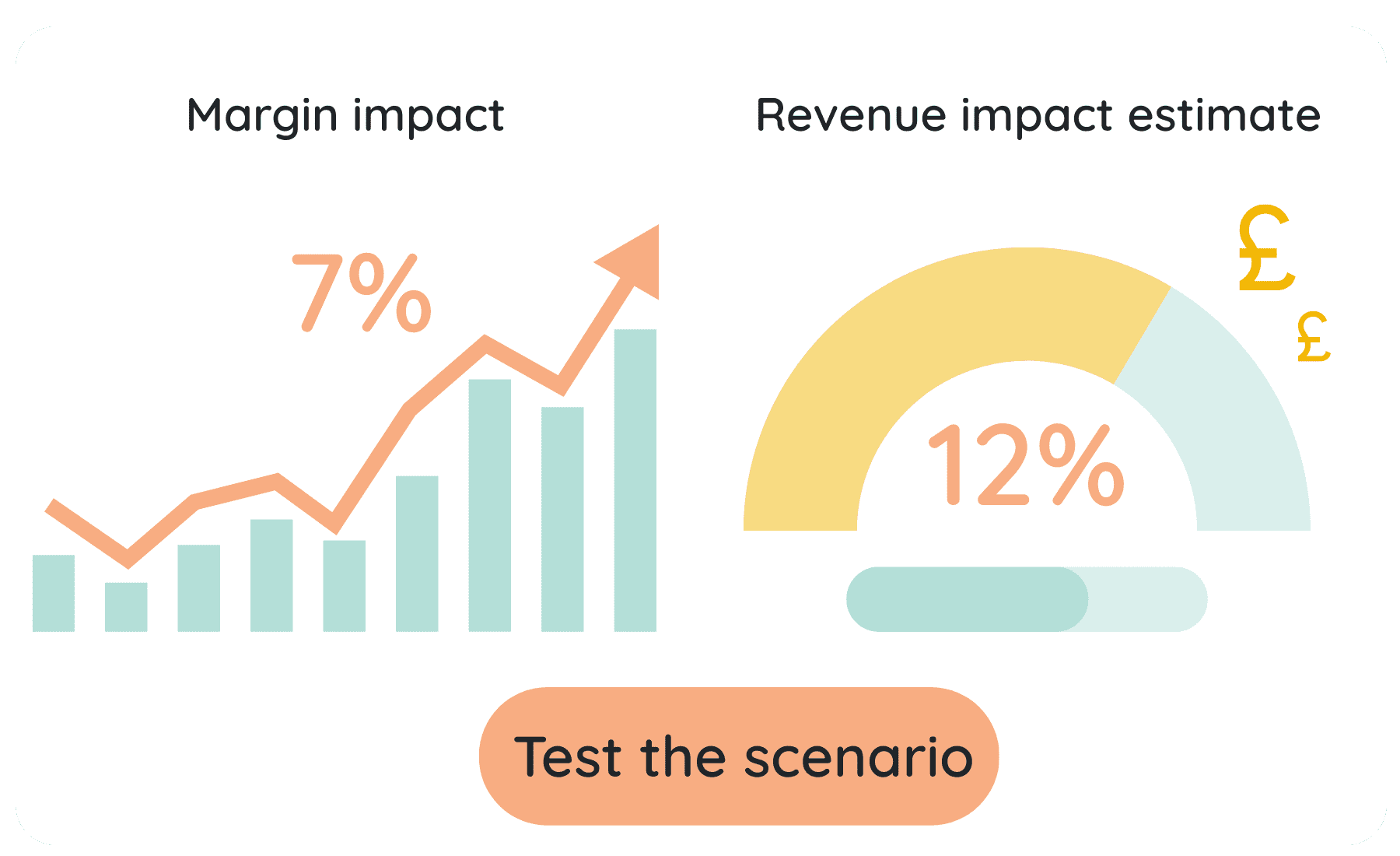
Advanced repricing engines do far more than suggest new price points: they feature built-in price simulation modules.
Before deploying a massive price update across 5,000 SKUs ahead of a major peak trading event or promotional season, the platform allows you to simulate the theoretical impact on revenue and overall bottom-line profitability. This eliminates panicked, reactive price edits triggered by aggressive competitor moves.
Conclusion
A retail repricing engine doesn’t replace the commercial expertise of Pricing Managers, it amplifies it. By automating data collection, data cleaning, and business logic execution, it frees up valuable time for high-level strategic analysis and vendor negotiation.
To learn more about building your strategy on reliable data, read our complete guide on Product Matching and Private Label (Own-Brand) Price Tracking.