
Compare the right products
PRICE MONITORING
Track competitor prices and prepare your pricing decisions.

They trust Retail Shake












Compare prices on comparable products
Price monitoring means tracking competitors’ offer prices over time. It helps retailers and brands understand their positioning and spot market changes. A price difference needs context: product attributes, quantity, promotions, availability and sales terms.
Two washing machines from different brands may be comparable when the selected criteria match: 9 kg capacity, front loading, energy class and spin speed. Repairability or dimensions may also matter to your analysis. Differences and missing information remain visible and need review.
Retail Shake combines product attributes and images to suggest matches. Your teams review them and validate the ones suitable for their analysis. A lower price alone does not determine a decision: you also consider promotions, availability and the offer’s terms.
What you can monitor



Track your price indices
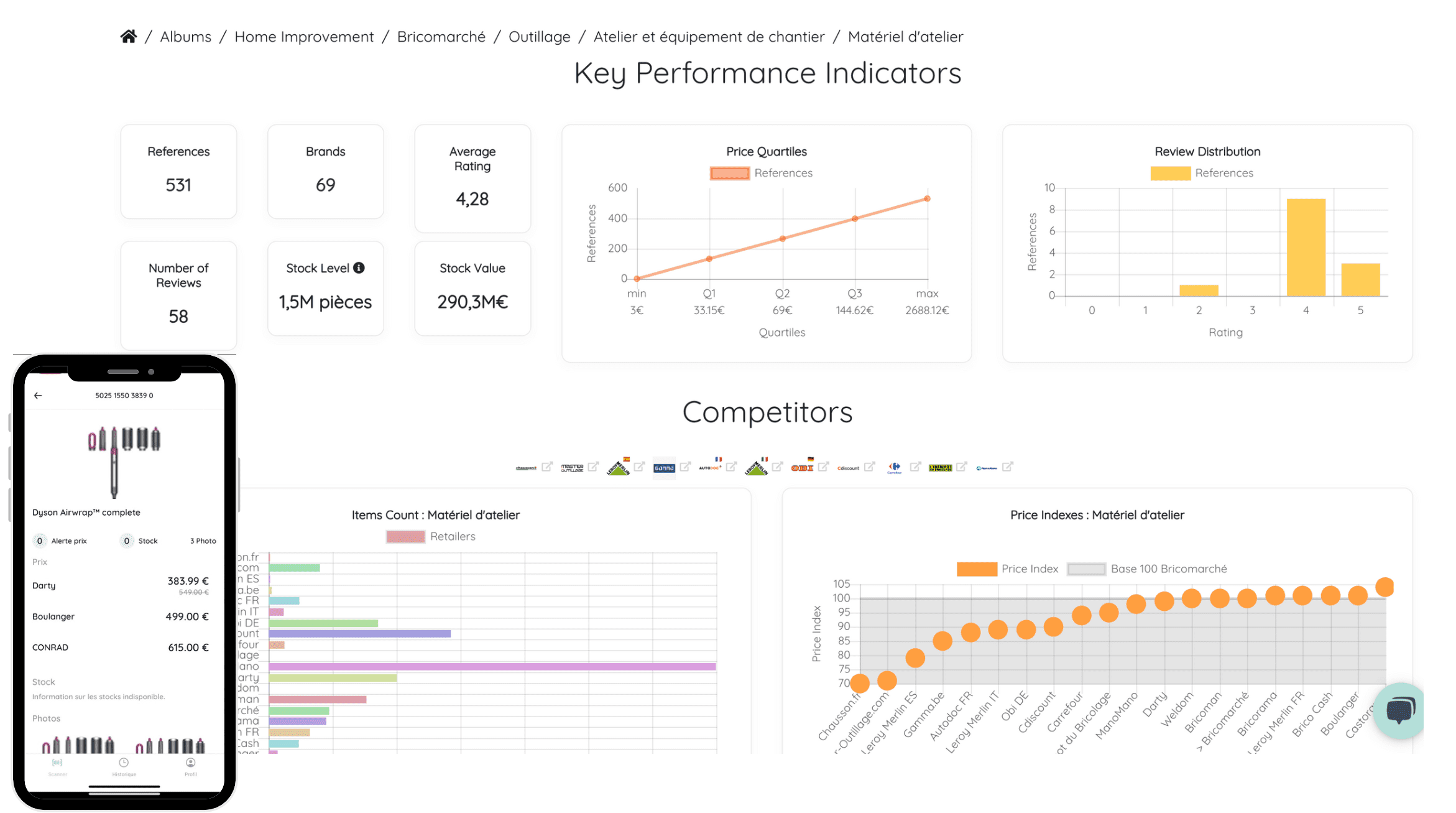
Review your positioning by product, category or competitor. Track price indices, trends and the number of products compared. These indicators help you assess differences within a defined scope.
Review price trends and promotions
Look back at observed prices over time. Distinguish displayed prices, crossed-out prices and promotions when that information is available. You can then put a price change in context.
Spot changes that matter
Choose the products and competitors to monitor. Price change alerts help you identify offers to review, alongside the promotions and availability observed.
Explore the steps of price monitoring
From choosing competitors to reading price indices, this video explains the steps of price monitoring. The video is in French. Explore our English learning resources to go further with offer comparison and analysis.
From price monitoring to pricing management
Price indices and trends inform your pricing rules and scenarios. Using sales data, costs and your chosen elasticity assumptions, compare simulated effects on revenue, unit sales and margins. These estimates support decisions; they do not guarantee results.
Start with your catalogue and your decisions
Which categories should you monitor? Which competitors should you compare? What information do you need to make a decision? Together, we define the criteria that matter and review an initial sample before extending the scope. You know your market; our team helps you use the tool.

Comparable data you can check
A price is useful when you know which product and offer it refers to. At Retail Shake, we review product matches, attributes, units and data freshness within the agreed scope. Missing information and product differences still need to be considered in your analysis.